
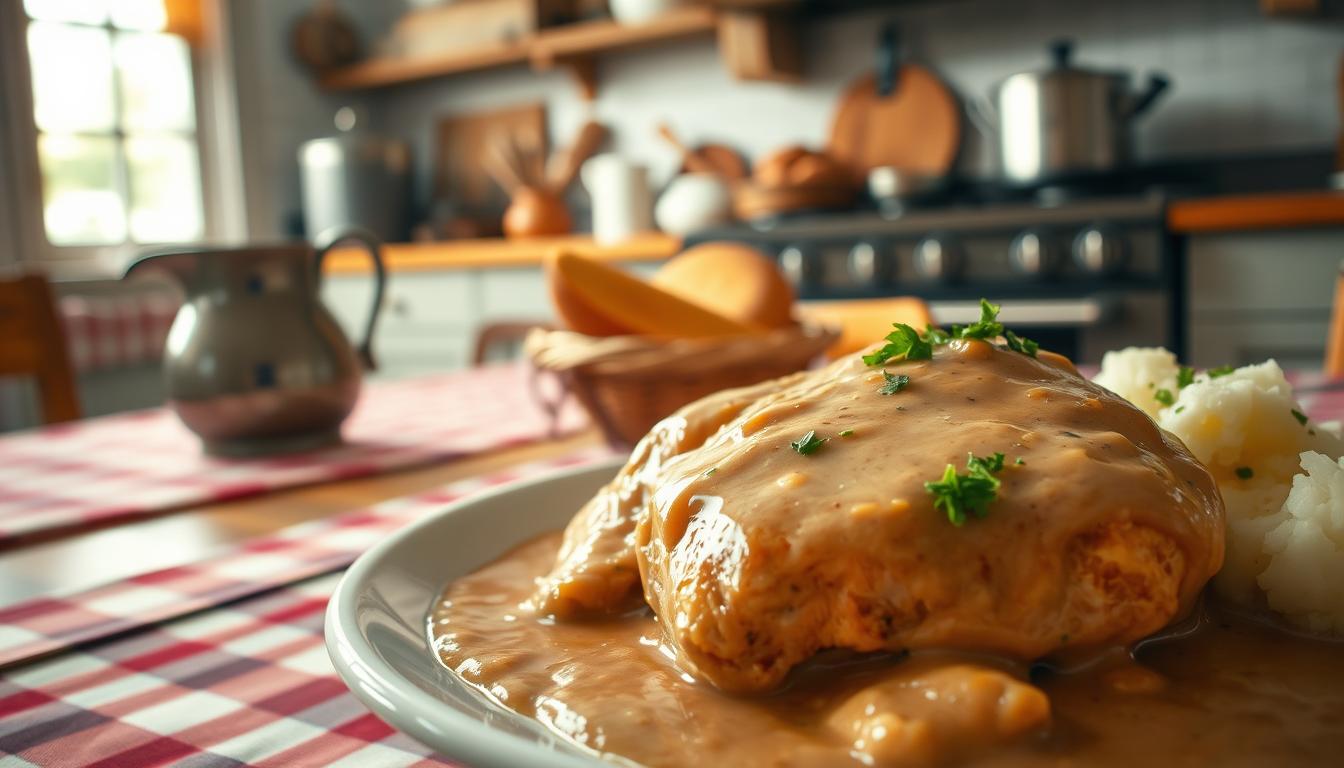
Chicken and Gravy Recipe
Growing up in a small Southern kitchen, I learned that chicken and gravy is more than a meal. It’s a warm hug on a plate. The rich, velvety sauce over tender chicken brings back memories of family gatherings and Sunday dinners.
This classic comfort food has been a staple in American kitchens for generations. Your journey into creating the perfect chicken and gravy starts here. It promises a delicious experience that will transport you to childhood memories and create new ones with your loved ones.
Whether you’re a seasoned cook or a kitchen novice, this recipe will guide you. It will help you craft a hearty chicken and gravy dish that speaks directly to the soul of home cooking. Get ready to transform simple ingredients into a meal that promises warmth, satisfaction, and pure culinary joy.
Table of Contents
Introduction to Southern-Style Chicken and Gravy
Southern cuisine is known for its comforting flavors. Chicken and gravy is a dish that shows the heart of home cooking. It’s more than a meal; it’s a tradition passed down through generations.
This classic dish has a rich history. It connects families and communities through delicious meals.
History of Chicken and Gravy in American Cuisine
Gravy recipes in the South started from practical cooking. Farmers and cooks made tasty sauces from simple ingredients. These sauces made meals richer and used up limited resources.
- Origins traced back to early Southern agricultural communities
- Developed as a way to use every part of the chicken
- Became a staple of family gatherings and Sunday dinners
Why This Recipe is a Family Favorite
Chicken and gravy brings people together. It’s comfort food that reminds us of grandma’s kitchen. It’s a dish that makes family gatherings special.
| Nutritional Highlight | Per Serving |
|---|---|
| Total Calories | 362 kcal |
| Protein | 29g |
| Total Fat | 22g |
Benefits of Making Homemade Gravy
Making your own gravy has big advantages. You choose the ingredients, cut down on preservatives, and adjust the flavors. Homemade gravy lets you enjoy the real taste of southern cuisine—fresh, flavorful, and made with love.
“Good gravy is the soul of Southern cooking” – Southern Culinary Tradition
Essential Ingredients for Perfect Chicken and Gravy
Starting with the right ingredients is key to making tasty poultry dishes. When you’re making fried chicken and gravy, the ingredients you choose are crucial. They can turn your meal from good to great.
For the best chicken, go for bone-in, skin-on thighs. These cuts are full of flavor and tender. Here’s what you’ll need:
- Chicken (preferably bone-in, skin-on thighs)
- All-purpose flour (4 tablespoons)
- Butter (3 tablespoons)
- Chicken stock or broth (2 cups)
- Seasonings:
- 1/2 teaspoon onion powder
- 1/2 teaspoon garlic powder
- 1/4 teaspoon poultry seasoning
- Black pepper to taste
The secret to amazing gravy is a perfect roux. This mix of fat and flour is the base of your gravy. It affects its thickness and taste. Cook your roux for 1-4 minutes for the flavor you want.
Pro tip: Use Better Than Bouillon chicken base (1 tablespoon) for extra flavor. It makes your chicken and gravy unforgettable.
Remember, great cooking is about quality ingredients and careful technique!
Kitchen Equipment and Tools Needed
Creating the perfect roasted chicken is more than just using great ingredients. The right kitchen tools can make a big difference. They help with precise measurements, the right cooking temperatures, and consistent results.
Preparing roasted chicken needs specific tools for top-quality results. Let’s look at the essential cookware and utensils for a delicious meal.
Essential Cookware for Roasted Chicken
- Cast Iron Skillet (Lodge 30 cm): Provides exceptional heat retention
- Roasting Pan (Chasseur Rectangular 40 cm x 26 cm): Perfect for even cooking
- Carbon Steel Pan (priced at $95): Ideal for initial chicken searing
Measuring Tools and Precision Instruments
Accurate measurements are key for roasted chicken. Invest in high-quality tools for consistent results:
- ThermoWorks Thermapen ONE ($115): Instant-read thermometer for checking chicken’s internal temperature
- Measuring cups and spoons: Essential for precise ingredient quantities
- Coil whisk ($141): Perfect for creating smooth gravy
Optional Equipment for Enhanced Results
While not necessary, these tools can enhance your roasted chicken preparation:
- Kitchen torch ($28): Great for achieving crispy skin
- Offset spatula ($22): Helps with flipping and handling chicken
- Cooking tweezers ($17): Provides precision in food handling
Investing in quality kitchen tools doesn’t have to be expensive. Choose durable, versatile equipment that works well in many recipes, not just roasted chicken.
Preparing the Chicken
Starting a perfect chicken stew means preparing the chicken well. You aim for rich flavors and tender meat. Choose high-quality boneless, skinless chicken breasts for the best taste.
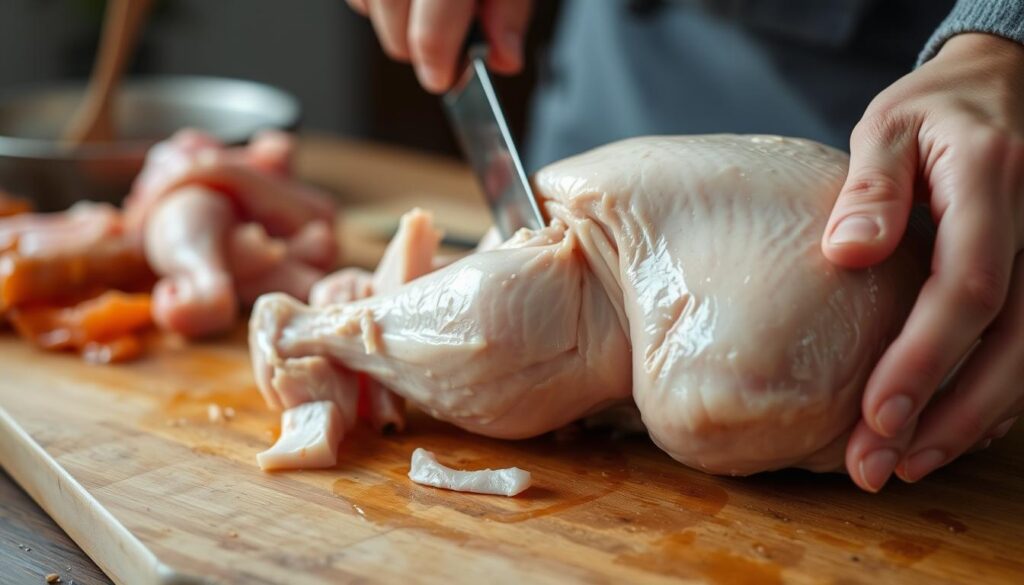
Before cooking, prepare your chicken with care. Here are the main steps:
- Trim any excess fat from the chicken breasts
- Pat the chicken dry with paper towels
- Season generously with salt and pepper
- Let the chicken rest at room temperature for 15-20 minutes
Seasoning is key in your chicken stew. Professional chefs suggest making a custom spice blend with:
- 1 ½ teaspoons salt
- 1 teaspoon onion powder
- ½ teaspoon garlic powder
- 1 teaspoon paprika
- 1 teaspoon black pepper
Chicken must hit 165°F to be safe to eat. A meat thermometer ensures your stew is both tasty and safe.
Pro tip: Let your seasoned chicken sit for a few minutes before cooking. This lets the spices soak into the meat.
For tender chicken stew, cut the chicken into 1-inch cubes. This method ensures even cooking and better flavor absorption.
Making the Perfect Homemade Gravy
Creating delicious gravy recipes is an art that turns simple meals into amazing dishes. Your homemade gravy can make any chicken dish special with just a few techniques.
The secret to amazing gravy recipes is mastering the basic roux technique. This mix of fat and flour creates a smooth, rich base for your gravy.
Basic Gravy Techniques
First, learn the key parts of gravy:
- Use 4 tablespoons of fat (butter or chicken drippings)
- Add 4 tablespoons of all-purpose flour
- Cook the roux for 1-6 minutes depending on desired color
- Gradually whisk in liquid (chicken broth or drippings)
Troubleshooting Common Gravy Issues
Gravy can be tricky, but these tips will help you fix common problems:
- Lumpy gravy: Whisk continuously while adding liquid
- Thin gravy: Use cornstarch or create a Beurre Manié
- Bland flavor: Season with poultry seasoning (1/4 teaspoon per batch)
Tips for Achieving the Right Consistency
Getting the perfect gravy consistency needs precision. Here’s a helpful guide:
| Technique | Liquid Ratio | Thickening Method |
|---|---|---|
| Standard Gravy | 1 tbsp flour per cup | Roux |
| Quick Thickening | 1 tbsp cornstarch + 2 tbsp water | Slurry |
| Alternate Method | 2-4 tbsp flour + 1/4 cup stock | Beurre Manié |
Remember, practice makes perfect with gravy recipes. Don’t get discouraged if your first try isn’t perfect. Every batch brings you closer to mastering gravy!
Step-by-Step Cooking Instructions
Making the perfect chicken casserole needs attention to detail. Start by preparing a tasty chicken dish that will impress everyone. The cooking steps are important to get the best flavor and tender meat.
- Prepare the chicken by patting it dry with paper towels
- Season the chicken generously with salt and pepper
- Heat cooking oil in a large skillet or casserole dish
- Brown the chicken on all sides until golden (approximately 5-7 minutes)
- Transfer chicken to the oven or continue cooking on stovetop
Cooking times are key for a great chicken casserole:
| Cooking Method | Temperature | Estimated Time |
|---|---|---|
| Oven | 375°F | 45-60 minutes |
| Stovetop | Medium Heat | 30-45 minutes |
| Slow Cooker | Low Setting | 6-8 hours |
To check if your chicken is cooked right, use a meat thermometer. It should read 165°F at the thickest part. This ensures your chicken is safe and juicy.
“The secret to a great chicken casserole is patience and proper temperature control.” – Professional Chef
After cooking, let the chicken rest for 10-15 minutes before serving. This makes sure each bite is moist and full of flavor.
Serving Suggestions and Side Dishes
Your chicken and gravy dish deserves amazing sides to make the meal better. You’ll find perfect pairings that turn your dinner into a memorable experience.
Creating the perfect meal is more than just the main dish. The right sides can make your chicken and gravy even better, giving you a balanced and satisfying meal.
Classic Southern Pairings
- Creamy mashed potatoes
- Fluffy white rice
- Buttermilk biscuits
- Steamed green beans
- Fresh garden salad
Modern Culinary Twists
Looking to try something new with chicken pot pie sides? Here are some creative ideas:
- Roasted wild rice with herb-infused chicken stock
- Air fryer green beans with garlic
- Sweet potato gratin with layered cheese
- Crispy roasted Brussels sprouts
| Side Dish | Preparation Time | Flavor Profile |
|---|---|---|
| Wild Rice | 25 minutes | Nutty, earthy |
| Roasted Potatoes | 40 minutes | Crispy, creamy |
| Green Beans | 15 minutes | Fresh, garlicky |
These side dishes will make your chicken and gravy stand out. Whether you like traditional comfort or new ideas, these options will make your meal unforgettable.
Storage and Reheating Tips
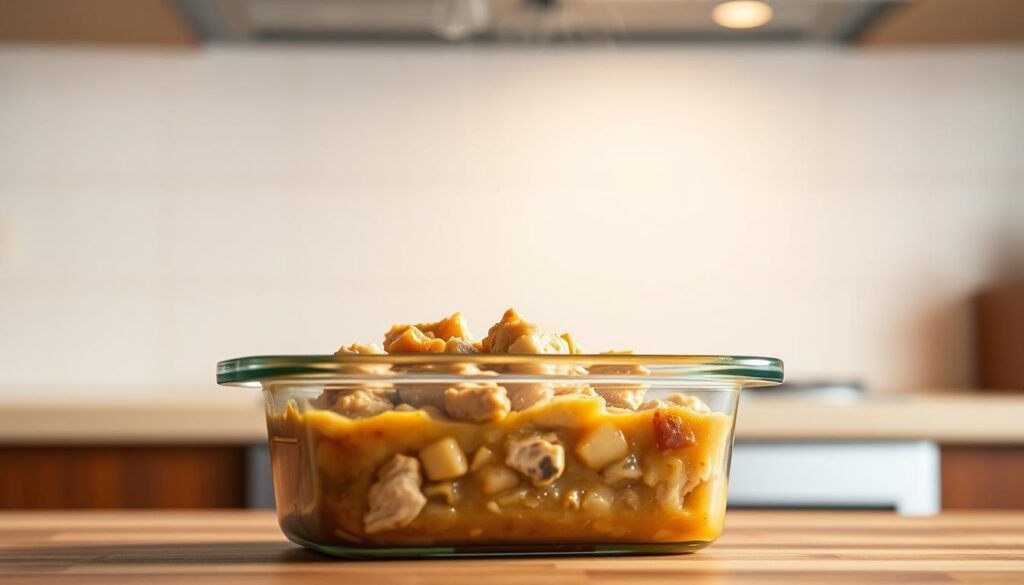
Keeping your homemade chicken stew fresh is key. You want to enjoy it safely and with the same great taste. Here’s how to do it right.
Here are the must-knows for storing your chicken stew:
- Refrigerate leftovers within two hours of cooking
- Store in airtight containers
- Keep refrigerated for 3-4 days maximum
- Freeze for extended storage up to six months
Reheating your chicken stew needs care to keep it moist and flavorful. Here are some methods to try:
- Microwave: Heat for 1 minute on full power, then 30-second intervals
- Stovetop: Warm over low heat, stirring frequently
- Oven: Reheat at 350°F, covering to retain moisture
- Air Fryer: Heat at 375°F for 4-6 minutes
Always check the chicken’s internal temperature reaches 165°F for safety. If the gravy gets too thick, add a bit of broth to fix it.
Pro tip: Never reheat chicken more than once to minimize bacterial risk!
Follow these tips, and your leftover chicken stew will be just as tasty as the first time. Enjoy!
Conclusion
Your homemade chicken and gravy recipe is more than a meal. It’s a comfort food experience that connects generations. With just 40 minutes of cooking and simple ingredients, you’ve made a classic dish.
This comfort food lets you turn basic ingredients into a memorable meal. Each serving has 27 grams of protein and rich, home-style flavors. By mastering this recipe, you’re keeping a culinary tradition alive.
Cooking is about creativity and personal touch. Feel free to try different herbs, adjust seasonings, or pair it with various sides. Your kitchen is a canvas, and this recipe is your starting point for delicious adventures.
We invite you to share your own twists on this classic comfort food. Whether you’ve added a special spice blend or found a unique serving technique, your cooking story matters. Enjoy the process, savor every bite, and keep the tradition of homemade meals alive in your kitchen.
FAQ
What cut of chicken works best for this recipe?
Bone-in, skin-on chicken pieces are the top choice for chicken and gravy. Thighs and legs are especially tasty. You can also use a whole chicken cut into pieces or chicken breasts if you prefer.
The bone-in pieces make the flavor richer and the gravy more delicious.
Can I make this recipe with boneless chicken?
Yes, you can! Boneless chicken breasts or thighs work well too. Just be careful not to overcook them, as they dry out quickly.
How do I prevent my gravy from becoming lumpy?
To avoid lumpy gravy, slowly whisk your liquid into the roux. Add the liquid bit by bit while whisking. Make sure your roux is smooth before adding liquid.
If lumps form, strain the gravy or use an immersion blender to smooth it out.
How long can I store leftover chicken and gravy?
Leftover chicken and gravy can be stored in the fridge for 3-4 days. Keep it in an airtight container at or below 40°F. Reheat it to 165°F before serving.
Can I freeze chicken and gravy?
Yes, you can freeze chicken and gravy for up to 3 months. Store it in a freezer-safe container with some room for expansion. Thaw it in the fridge overnight and reheat gently to prevent the gravy from separating.
What are the best side dishes to serve with chicken and gravy?
Classic Southern sides include mashed potatoes, buttermilk biscuits, green beans, and cornbread. Rice is also great for soaking up the gravy. For a complete meal, add a fresh salad or roasted vegetables.
Can I make this recipe gluten-free?
Absolutely! Use gluten-free flour or cornstarch for your roux. Make sure all ingredients are gluten-free. Rice flour or arrowroot powder can also thicken the gravy.
What’s the secret to keeping chicken moist while cooking?
Don’t overcook your chicken. Use a meat thermometer to check the internal temperature. Let it rest after cooking to keep the juices in.
Brining or marinating beforehand can also add moisture and flavor.
Can I use store-bought rotisserie chicken for this recipe?
Yes, rotisserie chicken is a great shortcut! Use the drippings to make gravy or warm the chicken with homemade gravy. It’s perfect for busy weeknights.
How can I make my gravy more flavorful?
To make your gravy more flavorful, use chicken drippings and add herbs like thyme or rosemary. A splash of white wine or homemade chicken stock can also enhance it. A dash of Worcestershire sauce or poultry seasoning can boost the flavor too.
Tried & Tested: Is Worth It?
There are no reviews yet. Be the first one to write one.