
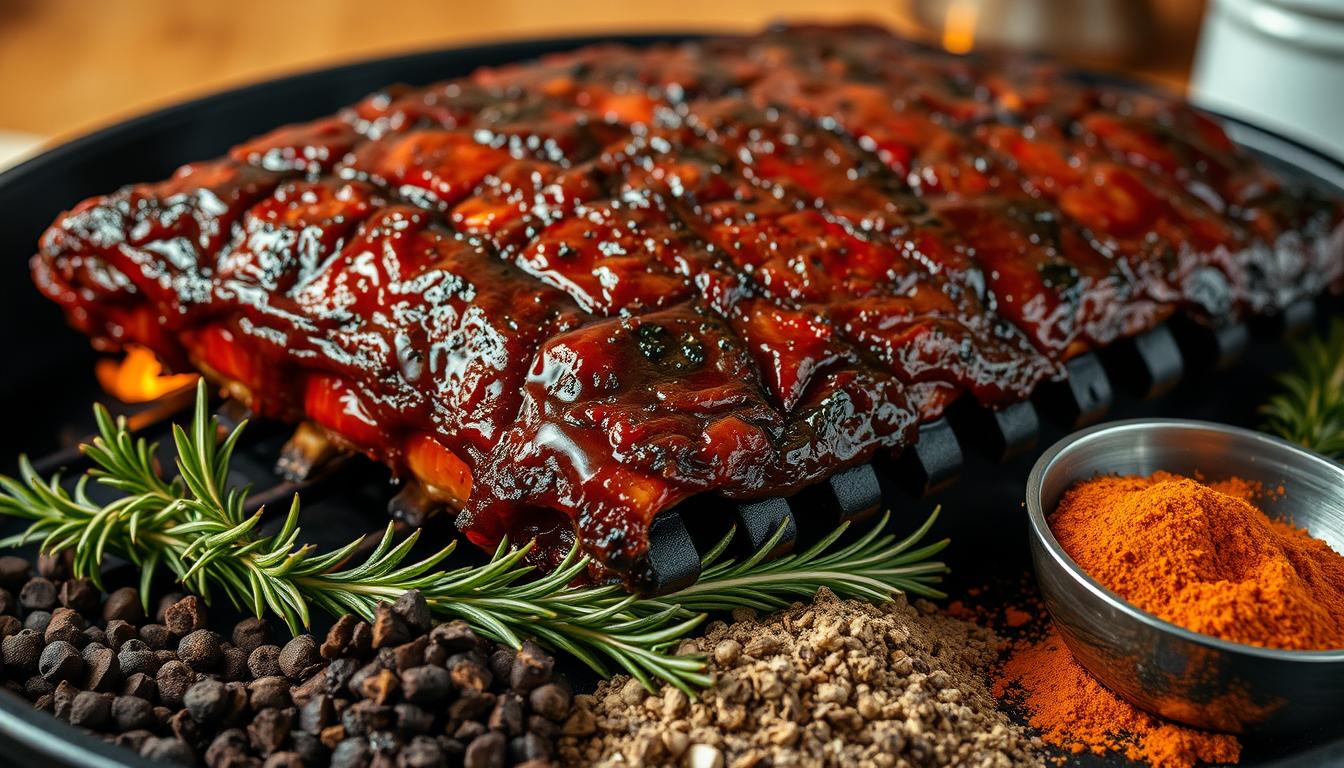
Beef Back Ribs Recipe
Every great meal tells a story, and these beef back ribs are about to become your next culinary adventure. Imagine walking into your kitchen, the aroma of perfectly seasoned oven-baked ribs filling the air. It promises a meal that will make your taste buds dance with joy. These tender ribs aren’t just food—they’re an experience waiting to happen.
Beef back ribs represent a delicious cut that transforms an ordinary dinner into something extraordinary. Whether you’re a weekend warrior in the kitchen or a seasoned home chef, this recipe will guide you. You’ll create ribs so succulent, they’ll have everyone asking for your secret.
Table of Contents
Understanding Beef Back Ribs
Beef back ribs are a tasty cut that barbecue fans love. They come from the upper part of the ribcage, near the spine. Butchers remove the ribeye roast to get these ribs. Despite having less meat, they pack a lot of flavor, making them a hit with meat lovers.
What Defines Beef Back Ribs
Beef back ribs are special among rib types. A full rack has 7 to 8 bones, with smaller portions available too. They are known for:
- Location near the cow’s spine
- Minimal top-surface meat
- Rich fatty sections between bones
- Intense beefy flavor profile
Selecting Quality Beef Back Ribs
Choosing the right beef ribs is important. Quality depends on marbling, color, and how they look. Look for ribs with:
- Consistent marbling
- Deep red coloration
- Minimal surface moisture
- Balanced fat-to-meat ratio
| Rib Quality Indicators | Ideal Characteristics |
|---|---|
| Marbling | Light to moderate white fat streaks |
| Color | Bright cherry-red |
| Fat Cover | Thin, white layer |
| Texture | Firm with slight give |
Distinguishing from Other Rib Cuts
Beef back ribs are different from short ribs or spare ribs. They have less meat but more flavor. Compared to Wagyu beef, they have less marbling but still offer a great taste experience that barbecue fans enjoy.
Essential Ingredients and Equipment
To make delicious beef back ribs, you need the right ingredients and tools. These will make your barbecue experience better. Start by getting the right rib seasonings and equipment before cooking.
- 4 pounds of beef back ribs (2 racks)
- Olive oil spray
- Dry rub spices:
- 2 teaspoons smoked paprika
- 1 teaspoon garlic powder
- 1 teaspoon onion powder
- 1 teaspoon salt
- 1 teaspoon black pepper
- ½ cup apple cider vinegar
- 2 tablespoons hot pepper sauce
For cooking, you’ll need these tools:
- Rimmed baking sheet
- Parchment paper
- Meat thermometer
- Basting brush
- Aluminum foil
The right rib seasonings and cooking tools can make your beef back ribs amazing. Choose quality ingredients and tools for a dish that will wow your guests.
Pro tip: Use high-quality olive oil spray to help your rib marinade stick to the meat.
With your ingredients and tools ready, you’re set to make a tasty beef back ribs dish. It will surely delight your taste buds.
Perfect Dry Rub Seasoning Mix
Making the ultimate rib rub recipe is like a work of art. It turns simple beef back ribs into a feast to remember. Your seasoning skills can make the meat go from good to amazing.
Creating the perfect dry rub is all about knowing how each spice adds flavor. The right mix of spices can open up a world of delicious flavors.
Basic Spice Combination
Start with these essential ingredients for your rib rub recipe:
- 2 tablespoons kosher salt
- 1/2 teaspoon freshly ground black pepper
- 1 tablespoon garlic powder
- 3/4 tablespoon onion powder
- 1 tablespoon smoked paprika
Secret Flavor Enhancers
For an extra kick, add these secret ingredients:
- Brown sugar for sweetness
- Cayenne pepper for heat
- Dried herbs like thyme or oregano
- Ground coffee for depth
Proper Application Techniques
Applying your dry rub right is key for great flavor:
- Pat the ribs dry with paper towels
- Apply the rub generously, rubbing it into the meat
- Let ribs sit for 30-60 minutes before cooking
- For even more flavor, refrigerate overnight
| Nutritional Information (per tablespoon) | Amount |
|---|---|
| Calories | 23 |
| Carbohydrates | 4g |
| Protein | 1g |
| Total Fat | 1g |
| Sodium | 1764mg |
Pro tip: Keep your homemade dry rub in an airtight container at room temperature for up to 6 months. It’s best within 3-4 months. This seasoning is great on chicken, beef brisket, pork shoulder, and burgers!
Preparing Your Beef Back Ribs
Turning raw beef back ribs into a delicious dish begins with preparation. The secret to great ribs is in trimming and removing the membrane. This makes the ribs ready for seasoning and smoking.
- Inspect the rack for any excess fat or unwanted tissue
- Use a sharp knife to carefully remove loose meat or uneven sections
- Trim large fat deposits, leaving a thin layer for flavor
Removing the membrane is key for tender, tasty ribs. Here’s how to do it:
- Find the thin, silvery membrane on the bone side of the ribs
- Use a butter knife or your fingers to lift a corner of the membrane
- Grip the membrane with a paper towel for better traction
- Pull the membrane away from the bones in one smooth motion
Your prep work greatly affects the ribs’ taste and texture. Dry the ribs with paper towels to help seasoning stick.
| Preparation Step | Time Required | Key Technique |
|---|---|---|
| Trimming | 5-7 minutes | Remove excess fat, maintain thin layer |
| Membrane Removal | 3-5 minutes | Pull entire membrane in one motion |
| Drying | 2-3 minutes | Use paper towels, ensure dry surface |
Pro tip: Always use a sharp knife and work on a clean cutting board to maintain food safety during rib preparation.
Low and Slow Cooking Method
Mastering slow-cooked ribs takes patience and precision. The low and slow method turns tough beef back ribs into tender, delicious treats. They fall right off the bone.
When cooking beef back ribs, the oven temperature is key. The best method is to keep the oven at a steady 250°F. This low heat breaks down connective tissues and melts fat.
Temperature Control Essentials
Getting the temperature right is crucial for great slow-cooked ribs. Here are some important tips:
- Preheat your oven to exactly 250°F
- Use an oven thermometer to check the temperature
- Don’t open the oven door too often to keep the heat steady
Timing Guidelines for Perfect Ribs
Cooking time for beef back ribs is usually 2.5 to 3 hours. A 4-pound rack gives you about 10 ribs. Each serving has around 1.5 pounds of meat.
Moisture Management Techniques
To keep ribs juicy, manage moisture well. Here are some expert tips:
- Place a water pan in the oven to add humidity
- Baste ribs every hour with a homemade marinade
- Wrap ribs in foil for the last hour to keep them moist
By using these low and slow cooking methods, you’ll get beef back ribs that are incredibly tender. They’ll be full of rich, deep flavors.
Basting and Marinade Techniques
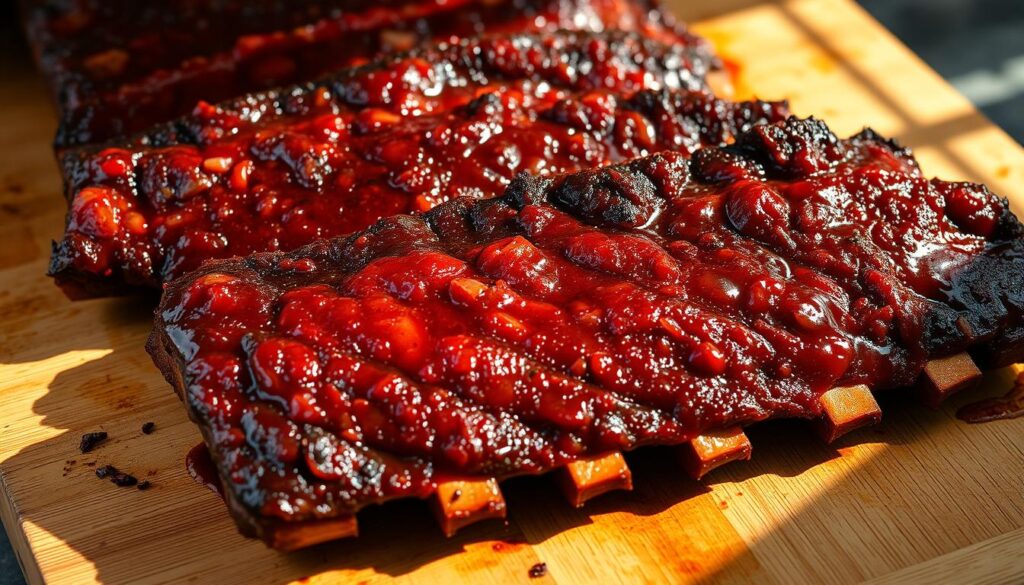
Learning how to baste and marinate beef back ribs can make them truly special. It’s all about adding deep flavors to your meat before and during cooking.
Start by picking the best ingredients for your marinade. A classic mix includes:
- 1/4 cup apple cider vinegar
- 1/4 cup white vinegar
- 1/4 cup olive oil
- 3 tablespoons honey
- 4 cloves of garlic
Timing is key when making your marinade. Marinate your beef back ribs for 12-24 hours in the fridge. This lets the flavors soak into the meat, making it taste amazing.
Basting is also crucial for keeping your ribs moist and flavorful. Baste your ribs every hour with a mix of marinade and hot pepper sauce. Heat the marinade for 3-4 minutes at medium-high before using. This makes the flavors even stronger.
Pro tip: Always keep your marinating meat refrigerated to prevent bacterial growth and maintain food safety.
Your aim is to make ribs that are tender, juicy, and full of flavor. This is achieved by choosing the right marinade and basting regularly.
Adding the Perfect BBQ Sauce
The final touch to your beef back ribs can make a big difference. BBQ sauce adds a sticky, mouthwatering exterior that makes ribs hard to resist.
There’s a wide range of BBQ sauce flavors to try. Your choice can greatly affect the taste of your ribs. Each regional style brings its own unique flavor that pairs well with the meat.
Sauce Selection Guide
Choosing the right BBQ sauce is important. Here are some popular options:
- Kansas City-style: Sweet and thick, perfect for caramelization
- Texas-style: Spicy and bold with less sugar
- Carolina-style: Tangy vinegar-based sauce
- Memphis-style: Thinner, more subtle flavor
Sauce Application Timing
Applying sauce is an art that needs precision. After 4 hours of slow cooking, brush your ribs with BBQ sauce. Then, grill them unwrapped at 225°F for another hour to get that perfect sticky, caramelized exterior.
Pro tip: Apply sauce during the last 30-60 minutes of cooking to prevent burning. The key is to layer the sauce gradually. This allows each layer to set and create a delicious glaze.
Remember, the goal is to enhance the meat’s natural flavors, not overpower them.
Signs of Perfectly Cooked Ribs
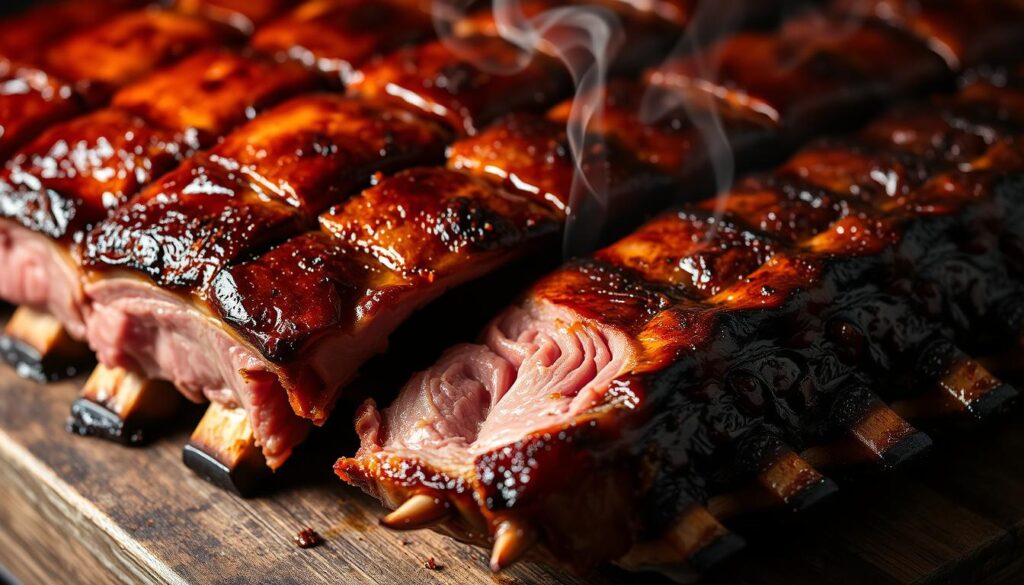
Mastering rib doneness is an art that separates amateur cooks from true barbecue experts. Knowing the signs of perfectly cooked ribs will boost your grilling skills. It ensures delicious results every time.
The meat temperature is key to knowing when ribs are done. For beef back ribs, aim for an internal temperature between 200-205°F. At this point, the meat becomes tender and falls off the bone, a favorite among barbecue fans.
Key Texture Check Indicators
- Meat pulls away from the bone easily
- Ribs bend without breaking when lifted
- Surface develops slight crackling
- Toothpick slides smoothly through meat
Visual cues are also crucial in checking rib doneness. Look for these signs:
- Color changes from pale pink to deep reddish-brown
- Bone tips becoming more exposed
- Visible meat shrinkage around the bones
Pro tip: Use a reliable meat thermometer to ensure accuracy and prevent overcooking, which can result in dry, stringy meat.
Remember, patience is key in achieving perfectly cooked ribs. Low and slow cooking method guarantees the best results.
Serving Suggestions and Side Dishes
Creating the perfect meal is more than just cooking amazing beef back ribs. Your choice of sides can turn a great barbecue into a memorable meal. The right sides will enhance the rich flavor of your ribs, making the meal balanced and enjoyable for everyone.
Here are some top side dish options to take your rib feast to the next level:
- Southern Classics
- Creamy mac & cheese
- Southern collard greens
- Cornbread muffins
- Fresh and Light Options
- Honey lime grilled corn
- Watermelon salad
- Carolina-style coleslaw
- Hearty Accompaniments
- Loaded Mediterranean sweet potato fries
- Black bean and corn salad
- Cheesy grits
When picking sides, mix up textures and tastes. Creamy sides like mac & cheese pair well with smoky ribs. Fresh salads offer a nice crunch, and grilled veggies add healthiness. Southern classics bring warmth and tradition to your table.
For a great presentation, place your sides in colorful dishes around the ribs. This makes the meal look good and lets guests mix flavors to their liking.
Conclusion
Your journey to perfect beef back ribs is now complete. This summary covers the key steps to make amazing ribs. You’ve learned how to choose the right cut and add flavors.
Remember, the secret to great ribs is a steady temperature of 225°F to 250°F. Also, aim for an internal meat temperature of 195°F to 203°F. And don’t forget to let the ribs rest for at least 30 minutes.
Storing your ribs is easy. Keep them in an airtight container in the fridge for 3-4 days. When reheating, use the microwave at 50% power to keep them moist.
Don’t be shy to try new wood chips, rubs, and sauces. Each try makes you better at making ribs. Share your ribs with friends and family. They’ll be amazed by your new skill.
FAQ
What are beef back ribs and how do they differ from other rib cuts?
Beef back ribs come from the top of the rib cage. They have less meat on top than short ribs or spare ribs. They’re known for their rich flavor and tender texture when cooked right.
How long should I cook beef back ribs in the oven?
Cook them low and slow. Aim for 275°F (135°C) for 3-4 hours. This breaks down connective tissues, making the meat tender and flavorful.
Do I need to remove the membrane from beef back ribs?
Yes, removing the membrane is key. It’s a tough layer that stops seasonings from getting in and can make the ribs chewy. Use a knife to lift and remove it for better flavor and tenderness.
What’s the best way to know when beef back ribs are fully cooked?
Check the internal temperature (195-203°F), perform the bend test, and look for meat pulled back from the bones by 1/2 inch.
Can I prepare beef back ribs in advance?
Absolutely! Season the ribs and refrigerate them overnight for better flavor. You can also partially cook them and finish later, perfect for meal prep or parties.
What type of BBQ sauce works best with beef back ribs?
The best sauce is a matter of taste. A classic Kansas City-style sauce with sweet and tangy flavors is often a good choice. Choose a sauce that complements the beef flavor.
How do I prevent my beef back ribs from drying out?
Cook at a low temperature, cover with foil, use a moisture pan, and baste with marinade or juices. This keeps the ribs moist and tender.
What sides pair well with beef back ribs?
Classic barbecue sides like coleslaw, baked beans, corn on the cob, and potato salad are great. For a lighter option, try grilled vegetables or a fresh green salad.
Can I use a dry rub if I’m also using BBQ sauce?
Yes! A dry rub adds flavor before the BBQ sauce. Apply the dry rub first, cook the ribs, and then add BBQ sauce for a caramelized finish.
How should I store leftover beef back ribs?
Store them in an airtight container in the fridge for 3-4 days. Reheat gently in the oven (wrapped in foil) to prevent drying out. Or enjoy them cold in sandwiches or salads.
Tried & Tested: Is Worth It?
There are no reviews yet. Be the first one to write one.